The Career Lattice: Navigating the Architecture of Non-Linearity and the AI-Driven Workforce
As the global workforce approaches 2026, the traditional "career ladder"—a linear, upward-only climb based on seniority—has become obsolete. It is being replaced by the "career lattice," a multidimensional model that prioritises lateral movement, continuous upskilling, and cross-functional agility.
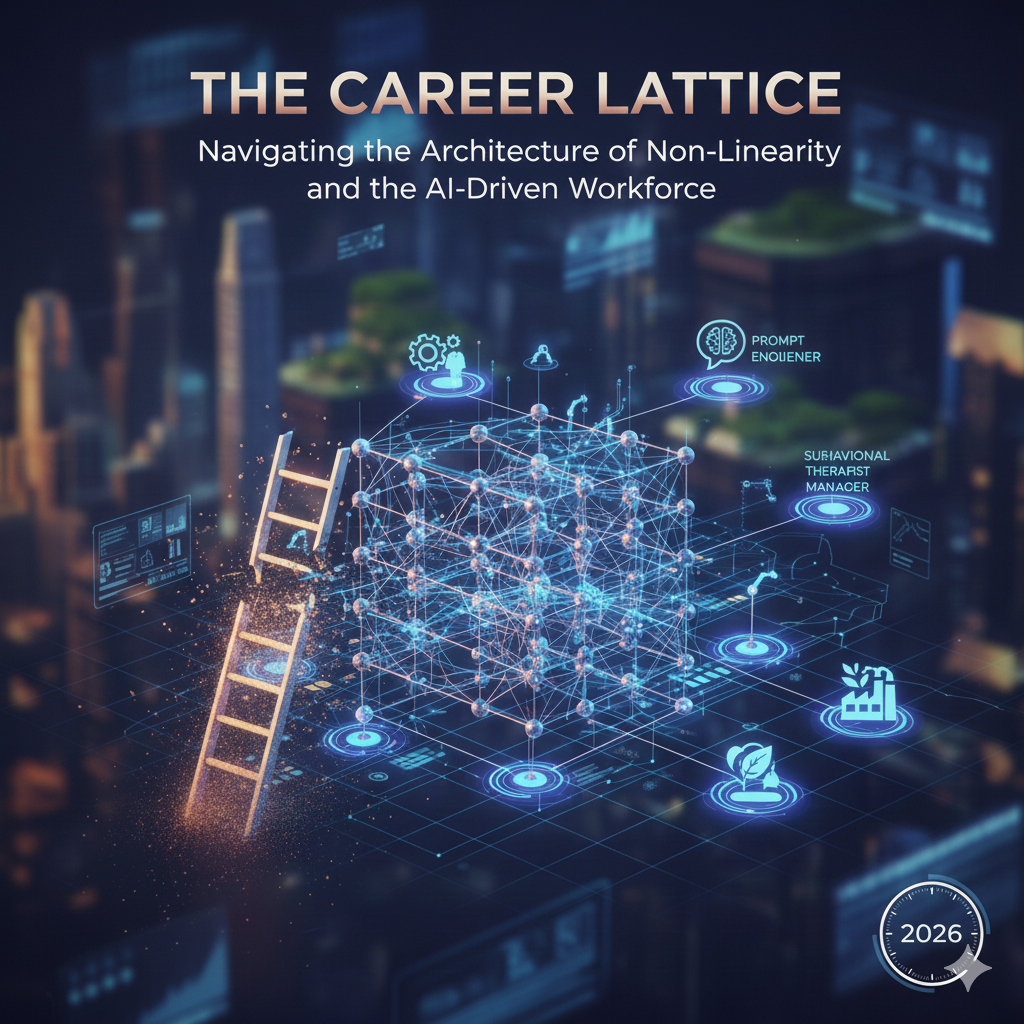
The traditional conceptualization of professional advancement has undergone a radical systemic transformation, moving from the rigid, hierarchical structures of the industrial era to the fluid, multidimensional networks defined by the modern skills-based economy. For decades, the "career ladder" served as the primary metaphor for success, dictating a strictly upward trajectory focused on seniority, tenure, and increasing authority within a single functional domain. However, as the global marketplace approaches 2026, this linear model has become largely obsolete, replaced by "career lattices" and "squiggly" trajectories that prioritize adaptability, continuous upskilling, and cross-functional mobility. This shift is not merely a change in preference but a structural response to the rise of agentic artificial intelligence, the expansion of the fractional economy, and a generational realignment of values that prioritizes purpose and flexibility over traditional status markers.
The Industrial Obsolescence of Verticality and the Rise of the Lattice
The traditional career ladder was born at the dawn of the Industrial Revolution, designed to support hierarchical organizational structures that prioritized predictability and efficiency. In this model, businesses believed that by focusing on increasing the specific knowledge and skill sets of employees within a narrow vertical, they could ensure organizational success. Success was defined by a specific sequence of job positions, each offering higher pay and more responsibility in exchange for specialized, often siloed, expertise. While this structure provided clarity and a sense of order, it functioned on the assumption that every employee’s goals were identical and that market conditions would remain static enough to sustain long-term vertical progression.
By the early 21st century, the rigidity of the ladder began to fracture. The emergence of the data-driven environment and the rapid acceleration of technological change made tenure-based promotion less relevant than competency-based agility. Organizations realized that the "one-size-fits-all" trajectory failed to account for the diverse strengths and aspirations of a modern workforce, often leading to burnout and a lack of work-life balance. Traditional views suggested that high-performance expectations were inseparable from the ladder, but recent practices demonstrate that career lattices, which emphasize lateral movement and skill development, can contribute to a superior work-life balance by allowing employees to explore different roles without the singular pressure of upward movement.
The career lattice model provides a more open-ended picture of professional growth. It allows employees to move sideways, diagonally, or even downward to try out different roles and learn varied skills. This multidimensional picture is essential for breaking outdated perceptions of what it takes to maintain a high-performing organization. In a lattice framework, ideas, skill development, and recognition flow in multiple directions, fostering a culture where information reaches the point of greatest need. This modernization is intrinsically linked to the flattening of organizations, where the goal is to create a voice and choice for employees regarding their future trajectories.
Macroeconomic Catalysts: AI, Agentic Systems, and the Skills-First Economy
As the workforce enters 2026, the transition toward non-linear paths is being accelerated by three primary forces: the deployment of agentic artificial intelligence (AI), the structural shift toward skills-first hiring, and the expansion of the portfolio career model. These forces are fundamentally changing "who" is needed to do work and "how" that work is defined.
The Shift from Generative to Agentic AI
By 2026, the initial phase of AI adoption—focused on augmenting human tasks like drafting content or drafting emails—has given way to a more consequential phase: job displacement driven by agentic AI. Agentic AI refers to autonomous systems capable of executing complex workflows end-to-end with minimal human oversight. In sectors such as finance, accounting, procurement, and administrative operations, these systems are being deployed to handle reconciliation, reporting, and internal controls.
Research indicates that early deployments of agentic AI have primarily reduced the need for junior-to-mid-level white-collar roles, particularly in shared services and back-office functions. While senior roles remain relatively protected, the narrowing of traditional entry-level pathways forces new professionals to adopt non-linear entry strategies, often focusing on human-centric niches or technical roles that AI cannot yet replicate. Leaders must now articulate exactly how AI supports strategic priorities and provide comprehensive training rather than treating AI literacy as an individual responsibility.
The Skills-First Hiring Paradigm
One of the clearest structural shifts in 2026 is the move away from degree-based hiring toward skills-first recruitment. Employers are increasingly prioritizing demonstrable capabilities—assessed through tests, simulations, or work samples—over formal educational credentials. This pragmatic shift expands access to talent, reduces hiring delays, and aligns recruitment with job requirements that are evolving too rapidly for traditional curricula to keep pace.
The implications of this shift are profound for the non-linear professional. Credentials matter less, while current capability and the ability to upskill continuously matter more. This aligns with the "lattice" philosophy, as it allows individuals to transition between industries based on their skills rather than their specific major or previous job title. For workers, this lowers traditional barriers but raises expectations around lifelong learning; upskilling becomes a constant habit necessary to stay relevant.
The Rise of the Portfolio and Fractional Career
Individual career strategies are becoming more diversified as the single-employer, long-term tenure model continues to erode. Professionals in 2026 are increasingly building "portfolio careers," combining full-time employment with consulting, freelancing, or project-based assignments. This trend is not confined to senior executives; younger workers are also embracing multiple income streams as a hedge against job volatility in an AI-disrupted market.
This movement toward varied contractual formats—from platform work to employer-of-record arrangements—creates a fundamental contradiction for policymakers, who struggle to secure tax revenues based on traditional models. However, organizations are adapting by creating "mass customization" systems that accommodate these portfolio careers while ensuring organizational stability.
Regional Analysis: The Resilient and Evolving Indian Job Market of 2026
India's job market in 2026 stands as a unique synthesis of global technological trends and regional economic resilience. Contrary to concerns about mass automation causing insecurity, technological tools are increasingly empowering Indian workers. Approximately 75% of job seekers in India use AI-driven platforms for career advice and skill matching, leading to higher success rates and fairer hiring decisions.
High-Growth Sectors and Unconventional Non-Linearity
While AI continues to power the market, reports on Jobs on the Rise 2026 for India show that the fastest-growing careers extend well beyond technology into care-driven and human-centric roles. The rise of professions like behavioral therapy and veterinary science indicates a maturing economy responding to complex social needs and a generational shift in how society invests its attention and care.
The transition paths for these roles exemplify non-linearity. A Sustainability Manager often originates from a background in architecture or environment, health, and safety (EHS), while a Prompt Engineer might emerge from the creative world of copywriting. This suggests that the most successful professionals in 2026 are those who can bridge the gap between their original expertise and the emerging demands of a digital and socially conscious economy.
Gen Z and the Redefinition of Success in India
The attitudes of Gen Z in India are fundamentally different from their predecessors. Only 16% of Gen Z students aspire to traditional, long-term full-time jobs. A significant 43% prefer a "blended" career path—a full-time job combined with a side hustle. While financial stability remains a priority, it is no longer the sole motivator; 94% of Gen Z individuals consider long-term personal and professional goals, valuing location flexibility and flexible working hours. This strategic approach to career planning often leads to shorter tenures—38% plan to stay in a job for less than a year—which should be viewed not as a lack of commitment but as a deliberate effort to build a diverse skill portfolio.
The Psychological Blueprint: Cognitive Flexibility and Resilience
The ability to thrive in a non-linear career is not merely a matter of skill acquisition; it is rooted in cognitive flexibility—an individual’s capacity to change thoughts, goals, and behaviors in response to a changing environment. Research into job search behavior has identified cognitive flexibility as a core intrapersonal process that moderates the relationship between a professional's traits and their self-efficacy in securing employment.
The Mechanism of Perspective Shifting
Cognitive flexibility involves two critical aspects: the capacity to recognize various perspectives of an issue and the ability to switch between those perspectives as environmental demands change. This process typically requires "inhibitory control," which ensures that prior knowledge or habits are suppressed so that new perspectives can be processed through working memory.
In a career transition, this means the professional must be able to "unlearn" the norms of their old industry to adopt the mindsets of the new one. This cognitive adaptability is what distinguishes a successful career pivot from a frustrating experience of stagnation. High cognitive flexibility allows individuals to view career uncertainty as an opportunity for creativity and self-actualization—a pattern known as the "liberation of trajectory."
Resilience and Anxiety Mitigation
A non-linear path inevitably introduces periods of uncertainty, which can lead to anxiety. However, cognitive flexibility serves as a mediator and protective factor against threats to well-being. Studies indicate that higher cognitive flexibility relates to lower levels of unemployment anxiety and strengthened flexibility weakens anxiety even when external threats cannot be completely eliminated.
By developing this flexibility, professionals can maintain their psychological well-being during transitions, turning potential "stumbling blocks" into "launchpads" for future growth.
Case Studies of Illustrious Non-Linearity: Turning Detours into Destinies
The history of professional success is replete with individuals who achieved greatness only after dramatic career U-turns. These examples provide a powerful counter-narrative to the myth of the linear path, demonstrating that varied experience is often the precursor to innovation.
The Technology and E-commerce Pioneers
- Jeff Bezos: Before founding Amazon at age 31, Bezos had a lucrative career in computer science on Wall Street and held vice-president roles at various financial firms. His transition was a strategic pivot that leveraged his technical and financial acumen to capitalize on the nascent e-commerce sector.
- Ray Kroc: Kroc spent his career as a milkshake-device salesman before buying McDonald's at age 52. His deep understanding of the food service supply chain, gained through years of "non-linear" sales experience, allowed him to scale the company into a global franchise.
- Michael Bloomberg: At age 59, Bloomberg left his role as CEO of his financial data and media company to become the Mayor of New York City. He later returned to his role at Bloomberg L.P., showing that pivots can be cyclical and service-oriented.
The Creative and Humanistic Transformers
- Julia Child: Before becoming a celebrity chef in her 50s, Child worked in advertising, media, and secret intelligence during World War II. Her diverse background provided the discipline and communication skills necessary to revolutionize the culinary world.
- Vera Wang: Wang was a competitive figure skater and a journalist before entering the fashion industry at age 40. Today, she is one of the world's premier designers, her previous careers providing a unique aesthetic lens and a deep understanding of media.
- Brandon Stanton: Born in 1984, Stanton was a bonds trader in finance. After losing his job, he picked up a camera and created Humans of New York, a global phenomenon that proved creativity can be found late in life even without formal training.
- Ken Jeong: Jeong earned his MD and practiced as a physician before making his feature-film debut in Knocked Up at age 38. His medical background provided a unique comedic persona and a foundation of discipline.
The Strategic Reinventors
- Arnold Schwarzenegger: Schwarzenegger has made two major career changes, transitioning from a world champion bodybuilder in his 20s to an award-winning actor in his 30s, then becoming the Governor of California at age 56.
- Sara Blakely: Before founding Spanx, Blakely sold office supplies door-to-door for seven years. The resilience and sales skills gained during this period were instrumental in her entrepreneurial success.
These cases illustrate that non-linear paths allow for the building of depth, not just height. These professionals did not "start over"; they integrated their past chapters to create a unique value proposition that a linear path could never have provided.
A Guide to Action: Translating Non-Linearity into Professional Momentum
Navigating a non-linear career requires a proactive communication strategy that transforms perceived weaknesses into strengths. This involves a structured audit of skills, a reimagining of professional identity, and the mastery of storytelling frameworks.
Step 1: The Transferable Skills Audit
Before leaping into a new field, one must recognize the "professional genius zone"—the intersection of tasks that deliver measurable impact and activities that energize the individual. A skills audit should cover technical skills, soft skills (transferable), and industry knowledge.
- Inventory Creation: List all daily tasks, projects, and responsibilities from the last 12 months, including side projects, volunteer work, and hobbies.
- Feedback Synthesis: Seek feedback from colleagues and mentors to identify strengths that may be overlooked.
- Gap Analysis: Research job descriptions in the target industry to identify required skills. Compare these with the current inventory to identify specific areas for upskilling.
- Action Planning: Rate confidence levels in each skill (1–5) and plan targeted training or certifications to close identified gaps.
Step 2: Reshaping the Professional Narrative
Traditional resumes often read like disconnected lists of duties. A narrative resume, however, weaves these experiences into a cohesive story that showcases unique value.
- Find the Throughline: Group seemingly unrelated roles together by showing the common theme—such as "simplifying complex systems" or "driving user-centric design."
- Lead with Values: Instead of just listing titles, explain what mattered in each chapter of the career.
- The GROWTH Framework for Gaps: Use this structure to explain career breaks as intentional periods of development.
- Goals: What was intended to be accomplished?
- Reason: Why did the timing make sense?
- Outcomes: What was achieved (e.g., certifications, personal growth)?
- Wisdom: What was learned about self or industry?
- Transition: How does this position the individual for the next step?
- Highlight: The strongest skill or insight gained.
Step 3: Storytelling Frameworks for Interviews
In the world of non-linear pivots, traditional interview approaches often fail because interviewers are looking for motivation and adaptability. Professionals should use frameworks used by world-class communicators to make their ideas stick.
- The Pixar Framework (Change Stories): "Once upon a time... Every day... One day... Because of that... Until finally..." This is ideal for explaining how a realization led to a career pivot.
- The Golden Circle: Start with Why (purpose/belief), then How (unique approach), then What (offering/skills). This helps recruiters see the driver behind the pivot.
- The Resilience Arc: Factual challenge faced → Adaptive strategies used → Skills developed → Stronger professional position gained.
Step 4: Strategic Networking and Relationship Building
Momentum grows faster when supported by strong relationships. Non-linear professionals must move beyond passive applications to active networking.
- Informational Interviews: Reach out to people in the desired field to learn about daily realities and required skills.
- Digital Presence Audit: Update LinkedIn and other profiles with consistent messaging aligned with future goals rather than past titles.
- Lurking in Communities: Join industry-specific Slack or Discord servers to understand the language and challenges of the new field.
Organizational Strategy: Building the Infrastructure of Success
For organizations, embracing non-linear career paths is not just a matter of employee satisfaction; it is a strategy for building a resilient company culture that can handle rapid market shifts. Companies that support internal mobility and non-traditional trajectories are better able to retain talent and foster innovation.
The Leadership Audit and Fractional Strategy
As we head into 2026, many leaders will realize they need specialized guidance to navigate the AI era. This is where fractional leadership—hiring experienced executives on a part-time basis—becomes a strategic advantage.
Organizations must conduct Leadership Audits to identify where expert guidance could accelerate growth or reduce risk. Research shows that 58% of employees see ethical challenges in AI usage, yet only 26% of organizations have a dedicated leader overseeing responsible AI. Filling these gaps with fractional experts allows the business to scale without the overhead of full-time salaries.
Promoting a Culture of Growth and Choice
Leaders must normalize the idea that growth is not always upward. By encouraging lateral moves and "stretch" assignments, organizations can help employees develop "career mosaics" that increase their value to the company. Key strategies include:
- Acknowledging Biases: Root out outdated biases against "job-hopping" or resumes with gaps, viewing them instead as indicators of a creative, searching mind.
- Task-Based Work Redesign: Break down roles into tasks to allow for more flexible assignment based on skill and AI capabilities.
- Internal Outplacement and Coaching: Provide resources to help employees assess their skills and find new roles within the organization.
Future Outlook: The Convergence of Ambition and Care
As we look toward the end of the 2026 workforce cycle, a new archetype of the professional is emerging. They are younger in mindset, sharper in skill, and clearer about their expectations from work and life. Ambition has returned, but it is redefined on the worker’s terms: they seek stability and relevance, but they also expect leaders to lead with humanity and care.
In this environment, the "squiggly" career path is no longer a sign of indecision or lack of focus. Instead, it is the hallmark of the most adaptable and resilient workers. Those who have navigated multiple industries and amassed diverse experiences are the ones most likely to address complex global challenges in innovative ways. The organizations that win in 2026 will be those that spotted their leadership gaps early, filled them strategically with fractional expertise, and built a culture where the career lattice is the standard for growth.
The non-linear path is not a detour; it is the journey itself. Every chapter lived provides the skills, insight, and clarity necessary for the next transformation. For the professional of 2026, success is not measured by the height of the ladder climbed, but by the depth of the mosaic built—a collection of varied experiences, intentional pivots, and human-centric values that together form a resilient and meaningful professional life.